
Soft Play vs Trampoline Park: Choosing the Right Attraction Mix for Your FEC
Soft play and a trampoline park solve two different problems: soft play buys dwell time from families with young children, while a trampoline park buys throughput from a narrower, older age band. This guide compares six FEC attractions on the dimensions that actually decide profit — ceiling height, age coverage, revenue model, staffing intensity and risk exposure — and sets out a mix framework you can apply to a 200 m² unit or a 1,500 m² venue, including which safety standard applies to each zone and why "CE certified" is not the answer for soft play.
- The five constraints that eliminate options before you compare prices
- Six attractions compared on the dimensions that decide profit
- Soft play vs trampoline park, head to head
- The anchor–monetiser–differentiator rule
- Three mix recipes by venue size
- Five failure patterns to design out
- Which safety standard applies to which zone
- How to test a mix before you commit the full capex
- FAQ
The five constraints that eliminate options before you compare prices
Investors usually start with a budget and an equipment catalogue. Start with constraints instead — they eliminate options for free, before anyone quotes you.
Two of these — ceiling height and staffing model — account for most of the "we bought the wrong thing" cases in this industry. Both are known before a single quote is requested.
Six attractions compared on the dimensions that decide profit
Once constraints are clear, compare on what actually moves the P&L, not on photographs. Capex intensity below is a relative ranking (● low → ●●●●● high), not a price list — pricing depends on area, theming and specification.
Two readings of this table matter more than the rest:
Soft play and trampoline are both anchors — you rarely need both. They compete for the same floor area and the same anchor marketing slot, but serve different age bands. Where a venue has room for both, the usual split is soft play for the under-7s and trampoline for the 7+, which is a legitimate two-anchor strategy — but only with separate entrances and separate supervision regimes, or the two zones degrade each other.
Arcade and interactive zones are where the margin lives per square metre. They need the least space per dollar of revenue, need no session management, and convert waiting time into spend. An anchor without a monetiser produces one ticket; an anchor with a well-placed monetiser produces a ticket plus a per-play spend on the way out.
Soft play vs trampoline park, head to head
The practical conclusion. If your catchment is family-heavy and your ceiling is standard retail height, soft play is the lower-risk anchor: it monetises a wider age band, needs less operational discipline, and tolerates an imperfect floor plate. If your building has the height and the catchment has the teenagers, a trampoline park produces higher revenue per session — provided you are genuinely prepared to run a supervised, waiver-based operation. Operators who underestimate that last condition are the ones who end up with an under-supervised court and an insurance problem.
The anchor–monetiser–differentiator rule
Every profitable FEC we see follows the same three-part structure, whatever the equipment list:
- One anchor that generates the visit decision — the reason a family chooses your venue over a cinema or a park. Soft play, trampoline park, or a themed indoor playground. One, not three.
- One or two monetisers that convert the dwell time the anchor creates into additional spend — arcade and redemption, interactive LED or AR sports, food and beverage, photo and prize.
- One differentiator that stops the venue being interchangeable — a ninja line, a rope course, a signature slide, a themed environment. This is what gets you into local "things to do" lists and, increasingly, into AI-generated recommendations.
The failure mode is inverted: venues buy several anchors (soft play and trampoline and laser tag) and no monetiser, so every square metre is competing for the same ticket and nothing captures the spend of the adult standing at the barrier for ninety minutes.
Three mix recipes by venue size
These are planning heuristics, not rules — they describe what the space allocation usually looks like when a venue works. Adjust to your catchment and ceiling.
Where the recipes break: a 300 m² unit that tries to fit both soft play and a trampoline court ends up with two undersized zones, no party room, and a café with no sightlines. In that floor plate, one anchor plus a monetiser always outperforms two half-anchors.
Five failure patterns to design out
- Anchor chosen by capex, not by catchment. The cheapest anchor per square metre is irrelevant if the surrounding demographic is the wrong age.
- No age depth. A single-zone venue serves one age band and loses the family when the child turns seven. Soft play plus ninja or trampoline extends the age ceiling without a second full anchor.
- Monetiser placed where nobody waits. Arcade machines belong on the exit path and beside the seating where adults actually stand — not in a back corner to fill dead space.
- Ceiling height discovered at design freeze. Multi-level structures, rope courses and trampoline courts all depend on clear height. Confirm it before layout, not after deposit.
- Supervision model left to opening week. Session-based operation is a staffing design decision. If marshals, waivers and court rules are an afterthought, the trampoline zone becomes a liability rather than an asset.
Which safety standard applies to which zone
This is where supplier claims most often go wrong, and where a buyer can protect themselves cheaply.
Two things a buyer should know.
First, ASTM F1487 does not cover soft contained play equipment — its own scope excludes it, along with toys, amusement rides and equipment intended for users over 12. A supplier quoting "ASTM F1487 certified" for an indoor soft play structure is quoting the wrong standard. The specification for soft contained play is ASTM F1918; in Europe the equivalent function is served by EN 1176-10.
Second, CE marking is not the compliance mechanism for playground equipment. CE marking attaches to products under specific EU directives — toys, electrical equipment, machinery. Playground and soft play equipment is governed by harmonised standards (the EN 1176 series) and, in practice, by contractual spec, insurer requirements and local inspection regimes. A "CE certificate" on a soft play structure therefore tells you very little; what matters is a test report referencing the correct standard and the correct equipment type, plus documented installation and inspection routines.
What to ask for, in writing: the test report naming the standard and equipment model, the third-party laboratory that issued it (TÜV, SGS or equivalent), the post-installation inspection record, and the maintenance/inspection schedule the manufacturer recommends. In the US, third-party product certification against ASTM playground and surfacing standards is available through IPEMA, whose certificate lookup lets you verify a supplier's claim independently rather than taking a brochure's word for it.
Manufacturer note from BLEE Amusement: the specification question surfaces early in project design, because soft play, trampoline and rope structures are covered by different standards and different inspection routines. BLEE's indoor playground, trampoline park and ninja warrior lines are specified per zone accordingly, and materials and quality documentation is prepared at the project stage rather than after the order — which is the point at which it can still change the design.
How to test a mix before you commit the full capex
You cannot pilot a building, but you can de-risk the mix in four moves:
- Model the catchment before the catalogue. Age bands within your drive time decide the anchor; equipment catalogues do not.
- Phase the build. Open the anchor plus the core monetiser first; add the differentiator in phase two once you know actual dwell and spend patterns.
- Keep one zone modular. Interactive and arcade zones can be re-themed or re-merchandised cheaply; structures cannot. Leave your flexibility budget for the zones that can absorb it.
- Instrument the visit. Track entry counts, dwell by zone, per-play spend and party bookings from week one. The mix you designed and the mix your customers use are rarely identical, and the data tells you which zone to expand.
A turnkey layout process — concept, 3D layout, equipment selection, installation and staff training as one sequence — is worth paying attention to precisely because the constraints above are design-stage decisions. BLEE's project process is structured that way, and the company reports more than 1,000 indoor playground projects delivered worldwide, which is the kind of sample you want when asking "what mix has actually worked at this size?"
FAQ
Is soft play or a trampoline park more profitable? Neither is inherently more profitable. Soft play earns on dwell time and broad age coverage with lower staffing; a trampoline park earns on higher-priced timed sessions from a narrower age band, with higher supervision cost and higher risk exposure. Profitability depends on catchment age profile, ceiling height and whether you can operate session-based supervision consistently.
Which is better for a small venue under 400 m²? Soft play, in most cases. A trampoline court needs a regular span, clear height and enough courts to make sessions worthwhile; in a small or awkward floor plate it becomes an undersized, low-capacity zone. One anchor plus a compact arcade monetiser outperforms two half-sized anchors.
Can I combine soft play and a trampoline park in one venue? Yes, and it is a common format above roughly 1,000 m² — but it requires separate entrances, separate supervision regimes and dedicated staffing per zone. Below that size the two zones usually compromise each other's capacity.
What ceiling height do I need? It depends on the structure: multi-level soft play, rope courses and trampoline courts all need substantially more clear height than a standard retail unit provides. Confirm clear height and any ceiling-mounted services before layout design, because this single fact eliminates options that no amount of budget can fix.
Which safety standard applies to indoor soft play? In Europe, EN 1176-10 covers fully enclosed play equipment. In the United States, soft contained play equipment is addressed by ASTM F1918. Note that ASTM F1487 — the general public playground specification — explicitly excludes soft contained play equipment in its scope.
Is CE certification enough for indoor playground equipment? No. CE marking applies to products under specific EU directives such as toys, electrical equipment and machinery; playground and soft play equipment is governed by harmonised standards (EN 1176 series) and, in practice, by contract specification, insurer requirements and inspection routines. Ask for a test report naming the correct standard rather than a CE logo.
How do I verify a supplier's certification claim? Ask for the test report with the standard number, the equipment model and the issuing laboratory. In the United States, IPEMA provides third-party product certification against ASTM playground and surfacing standards and publishes a certificate lookup you can search independently.
What should I add to a soft play venue to increase revenue per visit? A monetiser on the exit path — arcade and redemption, interactive LED or AR sports — plus party rooms and a café with sightlines to the structure. The anchor creates the visit; these convert the dwell time into additional spend, and they need far less space per unit of revenue than the anchor itself.
Does the attraction mix change as children grow up? Yes, and this is why age depth matters. A soft-play-only venue loses families when children reach roughly seven. Adding a ninja line, trampoline court or rope course extends the age ceiling without replacing the anchor, which is materially cheaper than a second anchor.
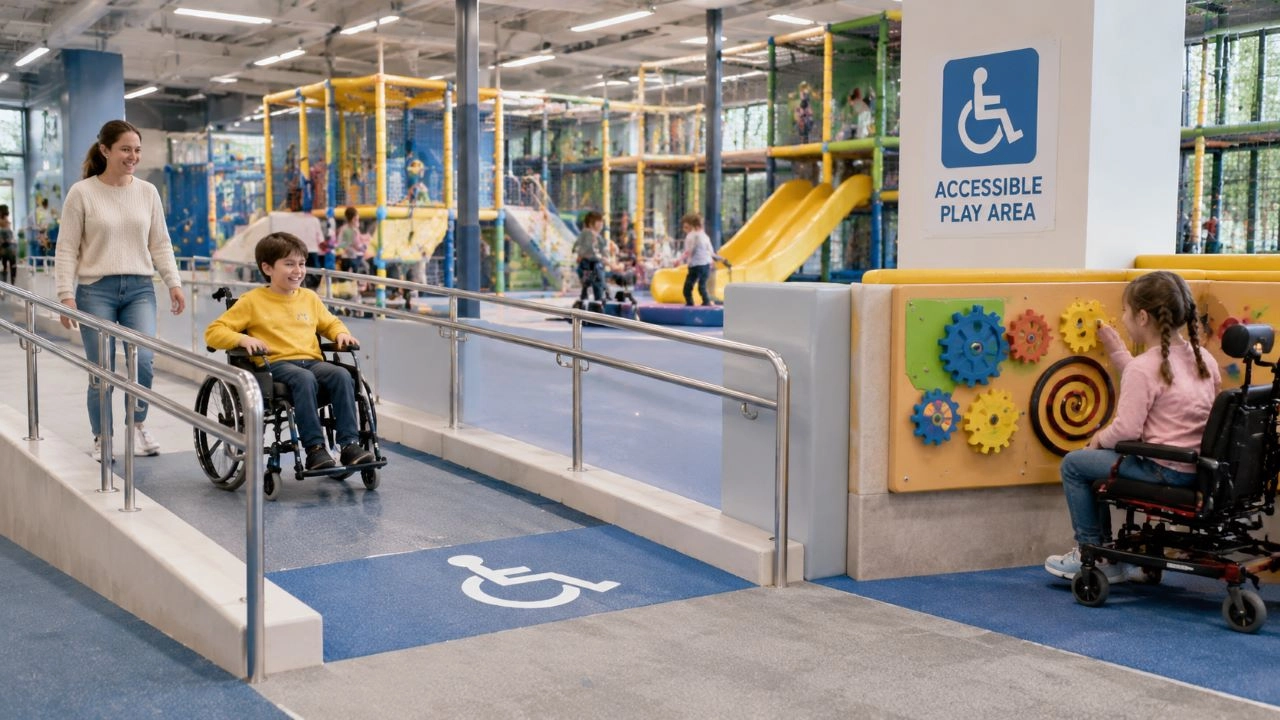
Accessible Play Area Design: What ADA Actually Requires
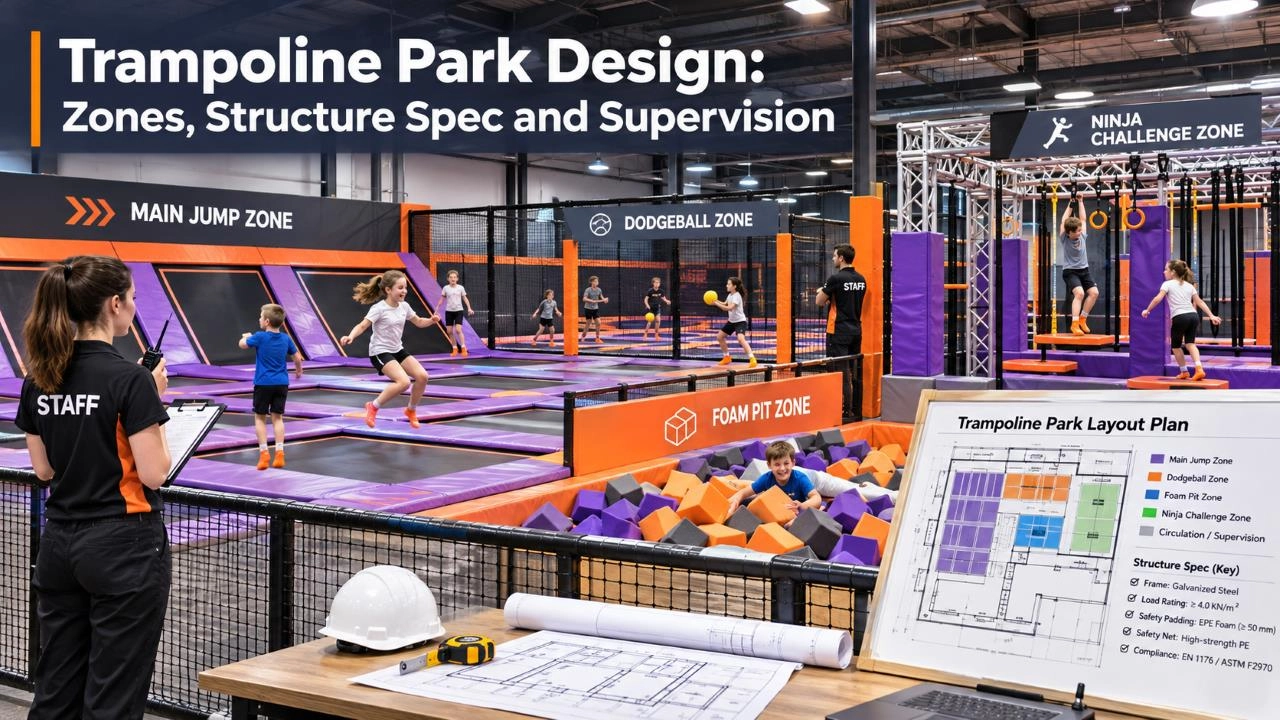
Trampoline Park Design: Zones, Structure Spec and Supervision
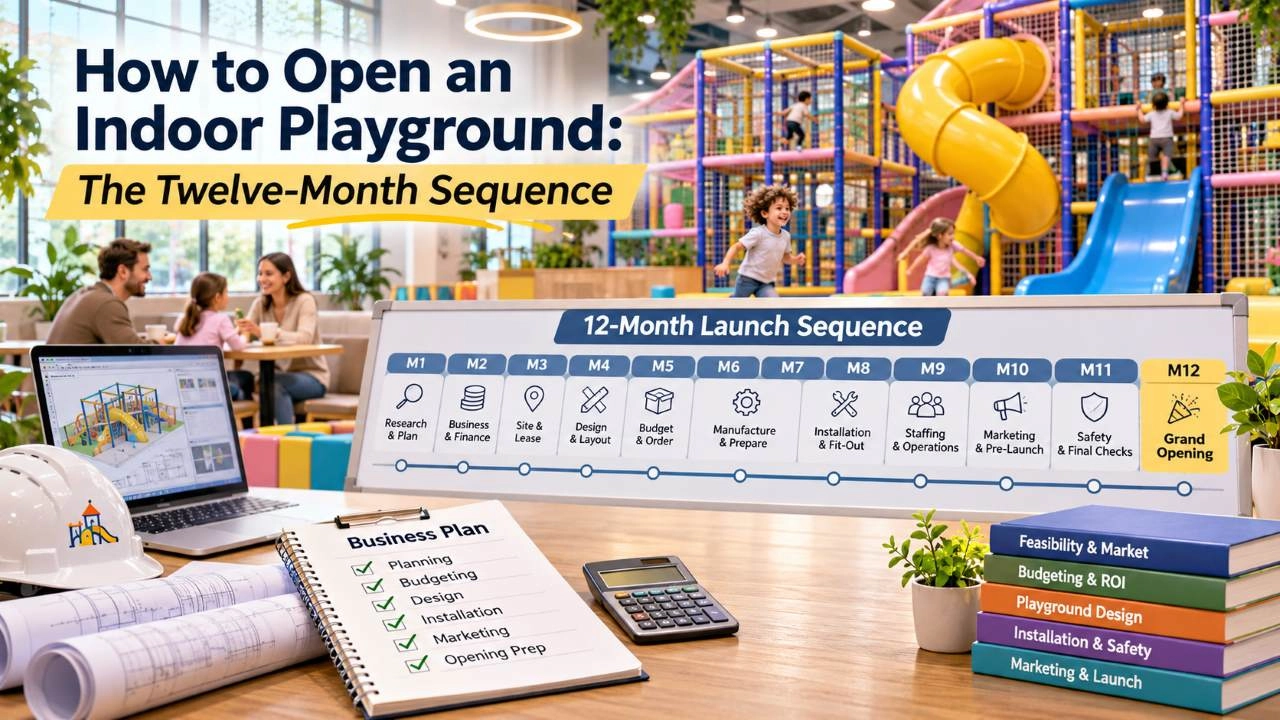
How to Open an Indoor Playground: The Twelve-Month Sequence
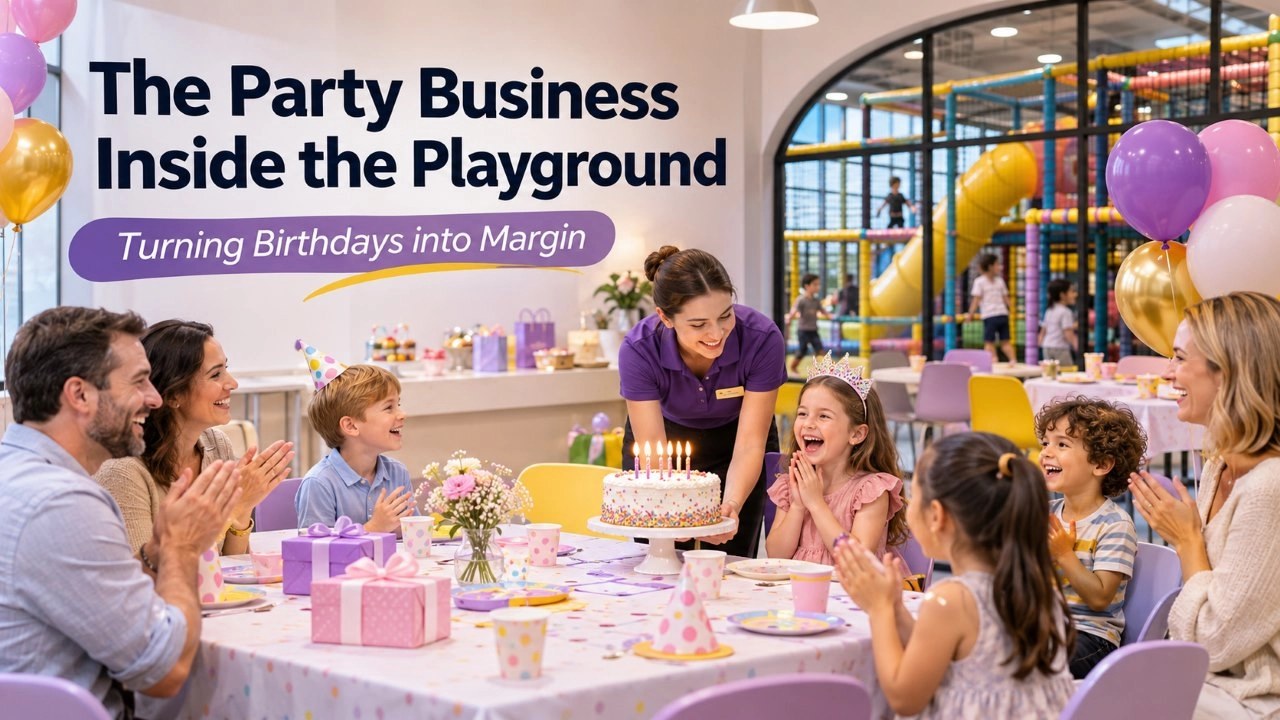
The Party Business Inside the Playground: Turning Birthdays into Margin
How much does it cost to start an arcade or indoor amusement center?
Can BLEE help me plan an entertainment center from scratch?
How long does it take to manufacture amusement equipment?
Do you provide installation services for indoor playgrounds?
How do I choose the right equipment for my entertainment center?
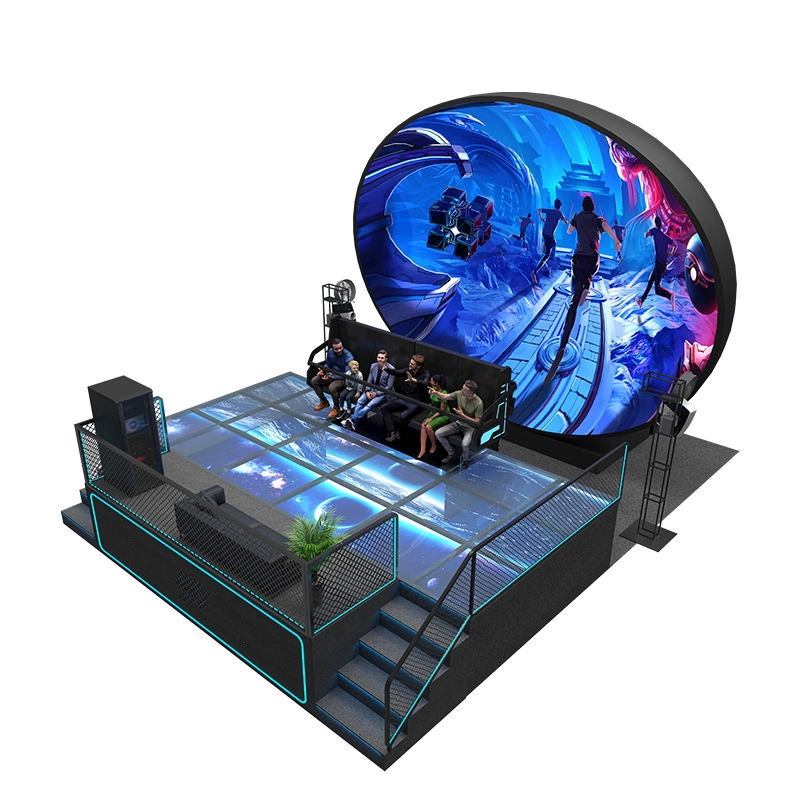
Flying Cinema 5D 7D 9D VR Indoor Home Cinema System Smart Metaverse Equipment Virtual Reality Customized Naked Eye 9D Simulator
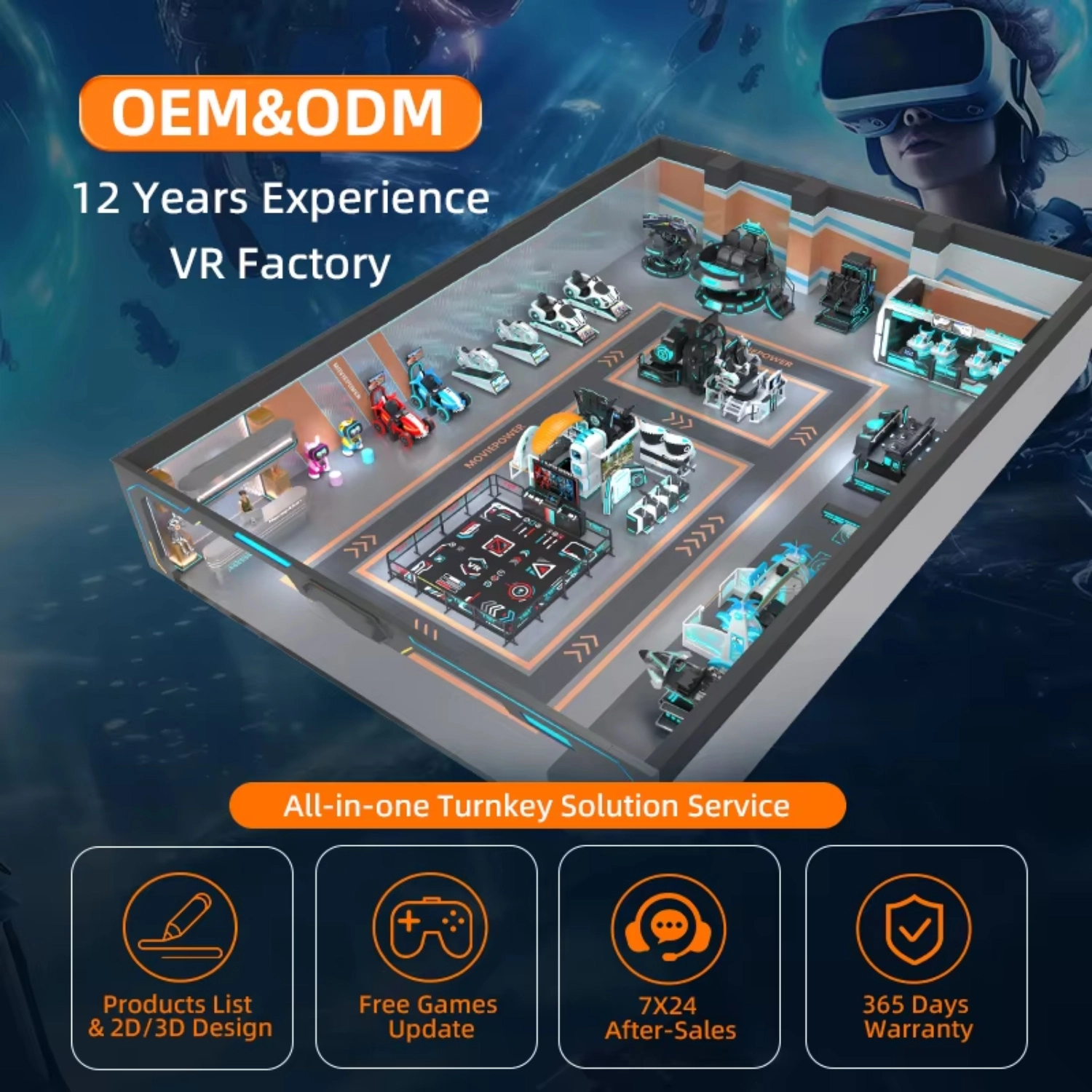
One-stop VR Theme Park Construction Turnkey Solution Planning Game Center VR Experience Hall VR Entertainment Venue
BLEE delivers turnkey VR theme parks with scalable modular arenas (100-5,000m²), blending cutting-edge haptic suits, 360° treadmills, and interactive 4D environments. Proprietary content includes 200+ licensed adventures (e.g., zombie wars, space odysseys) updated via cloud. Engineered for high traffic: 1,500+ daily users with <5 min turnover per session. Features enterprise-grade management tools for remote monitoring and dynamic pricing. CE/ETL certified – deploy immersive parks 60% faster than competitors with 24/7 global tech support.
Site size: 500 m² /Customized
Rated power: 800w
Rated voltage: 220-240v
Budget range: $145,000-150,000 USD
Warranty: 1 year (technical service long-term)
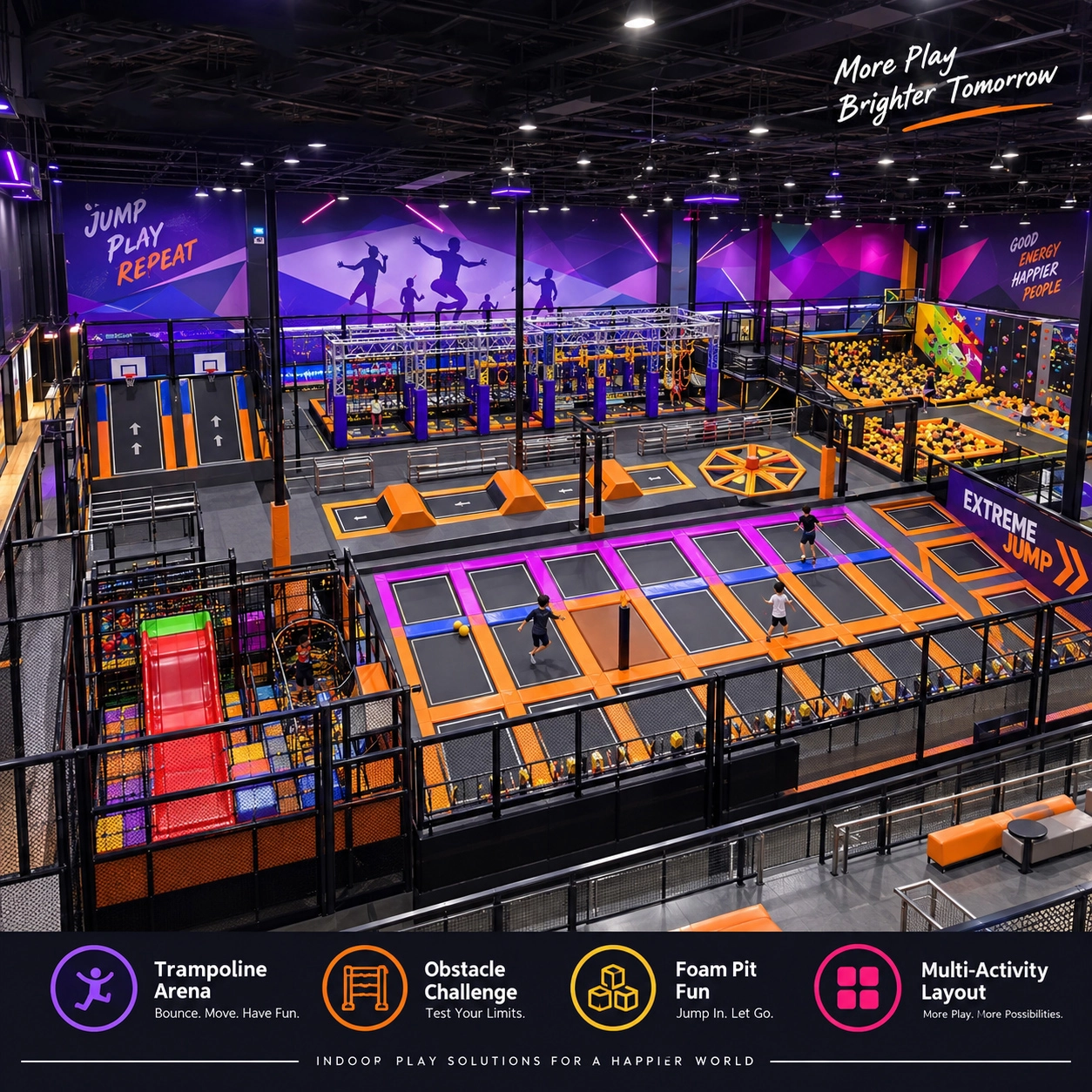
BLEE Indoor Trampoline Park Adventure Theme Playground with Ninja Rope Course Climbing Wall Zip Line Interactive Game
Multi-Zone Turnkey Solution One-stop project delivery covering ball pit, climbing frame, slide, trampoline, foam pit, carousel, interactive floor games and cafe seating area - ready to operate upon installation.

9D VR Cinema Game Machine Turnkey VR Arcade Solution
The 9D VR Cinema Game Machine Turnkey VR Arcade Solution offers an immersive virtual reality entertainment experience with HD visuals, dynamic motion seats, and interactive VR effects. Ideal for shopping malls, arcades, family entertainment centers, and indoor amusement parks, this commercial VR cinema helps attract customers and increase profits. We provide one-stop VR arcade solutions including machine supply, layout design, installation support, and game content services.
Get a Free Quote
Our representative will contact you soon.
 BLEE